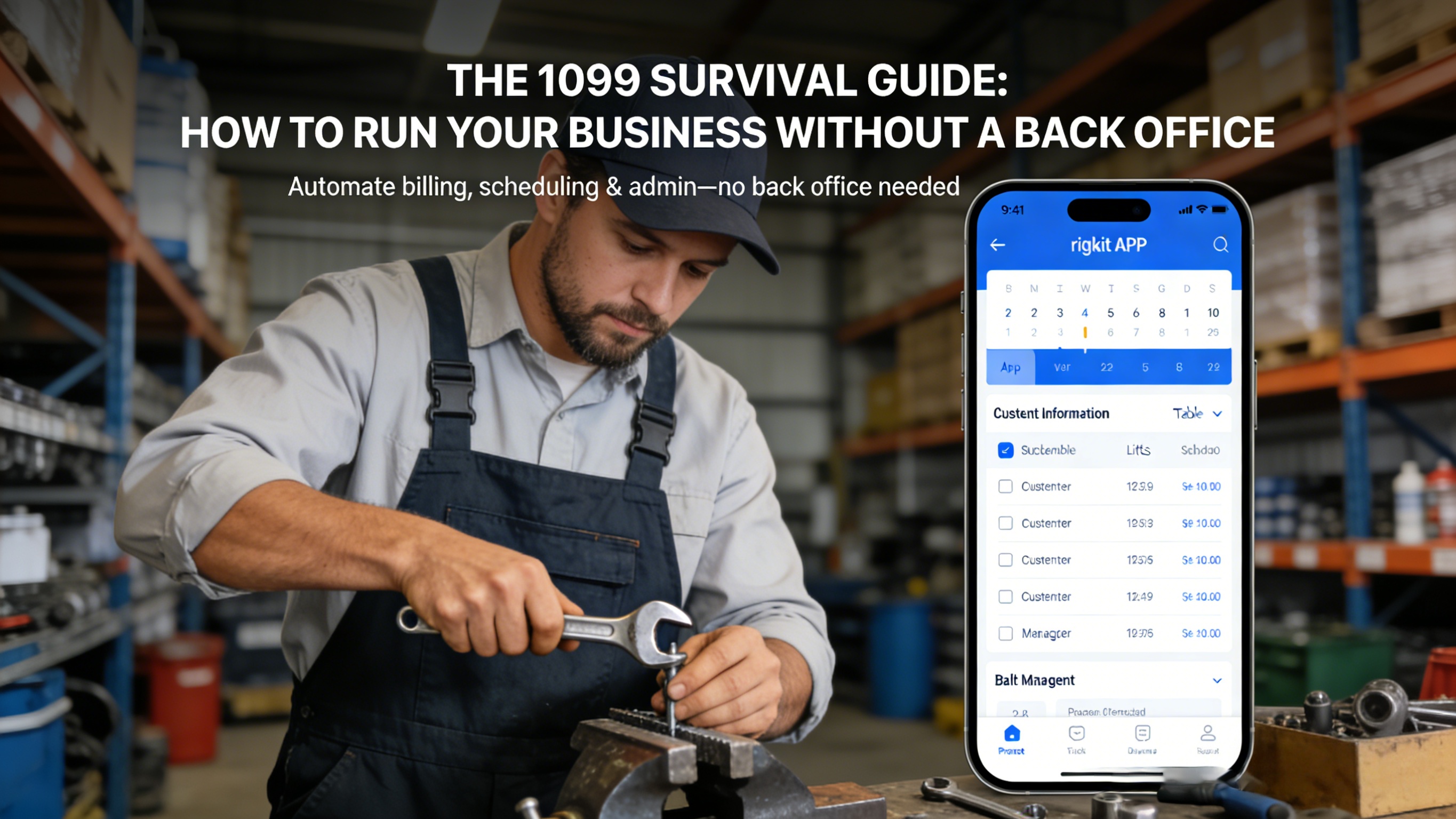
For many independent contractors in the U.S., the dream of "being your own boss" often feels more like "being your own secretary, accountant, and debt collector." When you’re a 1099 worker in the trades—whether you're an electrician, a plumber, or a HVAC specialist—every hour spent on paperwork is an hour you aren't getting paid for on-site.
Without a dedicated back office to handle the "boring stuff," things fall through the cracks. Invoices go unpaid, schedules overlap, and taxes become a nightmare.
Here is your 2026 survival guide to keeping your business running like a well-oiled machine, even if you are a team of one.
1. Stop Trading Time for Admin
The biggest mistake 1099 contractors make is trying to do everything manually. If you are still using paper notebooks or basic spreadsheets to track your jobs, you are leaking money.
In 2026, "survival" depends on centralization. You need a single source of truth where your client info, job history, and payments live. Tools like Rigkit are designed specifically for this; they act as your "digital foreman," ensuring you know exactly where you need to be and who owes you money without needing to hire an assistant.
2. Automate Your "Paperwork" (Before it Piles Up)
You didn't get into the trades to send emails. To survive without a back office, you must automate the three pillars of admin:
- Estimates: Send professional, digital quotes immediately while you're still at the job site.
- Invoicing: Set up systems that automatically follow up on unpaid bills.
- Reminders: Let a system text your customers 24 hours before an appointment so you don't waste gas on a "no-show."
3. Treat Your Finances Like a Corporation
One of the fastest ways to fail as a 1099 is mixing personal and business stress. Even without an accounting department, you should:
- Digitize every receipt: Use your phone to scan expenses the moment you leave the supply store.
- Set aside tax money monthly: Don't wait until April to realize you owe the IRS thousands.
- Use professional payment links: Stop waiting for checks in the mail. Offer credit card or digital payment options to get paid the same day the job is finished.
4. Build a "Virtual" Reputation
In the past, a back-office team would handle marketing and customer service. As a solo contractor, your "virtual" presence does that for you.
- Google Business Profile: Keep it updated with photos of your work.
- Automated Reviews: Use your management software to automatically ask happy customers for a 5-star review once a job is marked "complete." This builds your business while you sleep.
- 5. Leverage the Right Tech Stack
You don't need a massive software suite. You need one tool that understands the "rigors" of the field. The goal of a tool like Rigkit isn't just to "organize"—it’s to give you your weekends back. By moving your workflow into a dedicated platform, you eliminate the mental fatigue of trying to remember every detail of every job.
The Bottom Line
Being a 1099 contractor doesn't mean you have to be overwhelmed. By replacing a physical back office with a streamlined digital system, you can focus on what you do best: the craft.
Ready to stop the paperwork chaos? Explore how Rigkit can automate your 1099 business and help you reclaim your time.