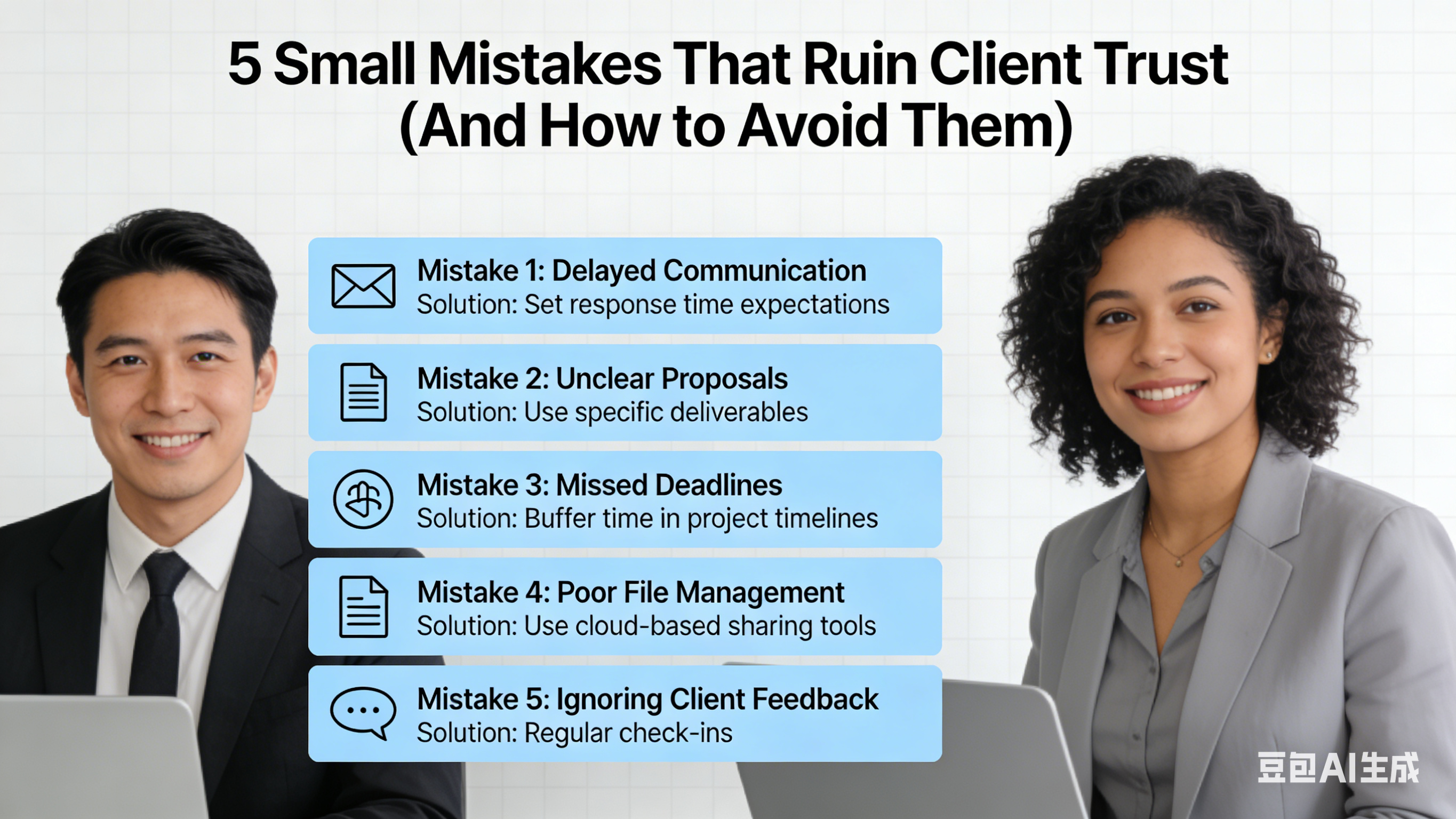
5 Small Mistakes That Ruin Client Trust (And How to Avoid Them)
As a solo contractor, your business lives and dies by trust.
When a client hires you, they’re letting you into their home, trusting you with their most valuable possessions, and relying on you to fix problems that directly impact their daily life. That trust is the foundation of repeat business, word-of-mouth referrals, and a steady, profitable one-man business.
The hard truth? Trust takes months to build, but it can be shattered in seconds by a small, unintentional mistake — one you might not even notice you’re making.
Below are the 5 most common, easy-to-miss mistakes that ruin client trust for solo tradesmen, plus simple, actionable steps to avoid them and keep your client relationships strong.
1. Being Unresponsive to Calls, Texts, and Emails
This is the #1 trust killer for solo contractors, and it’s also the easiest to fix.
When a client reaches out to you — whether it’s to book a job, ask a question about an invoice, or follow up on work you completed — they want to know you’re reliable. If they have to wait hours, days, or even weeks to get a reply, they’ll start to wonder: If they won’t reply to my text now, will they show up when they say they will? Will they help me if something goes wrong after the job?
Even if you’re busy on a job, up to your elbows in a repair, and can’t have a full conversation, radio silence breaks trust faster than anything else.
How to Fix It
You don’t have to drop everything to reply to every message immediately. You just need to set clear expectations, and acknowledge every message quickly.
- Set a standard response time: Commit to replying to every message within 2 hours during your working hours, and within 24 hours for after-hours messages. Stick to it, every single time.
- Send quick acknowledgments: If you’re on a job and can’t have a full conversation, send a 10-second text: “Hey, I’m on a service call right now, but I’ll get back to you with a full answer by 5pm today. Thanks!” This lets the client know you saw their message, and they don’t have to chase you for a reply.
- Use a simple tool to stay organized: A lightweight tool like Rigkit can help you track client messages, follow-ups, and job details in one place, so you never miss a message from a client.
2. Surprise Fees and Uncommunicated Price Changes
Nothing makes a client feel betrayed faster than a final invoice that’s higher than the quote you gave them — with no warning, no explanation, and no conversation beforehand.
Even if the extra cost is completely justified (like unexpected damage you found during the job, or additional work the client asked for), a surprise fee on the final invoice will make them feel like you’re trying to take advantage of them. It breaks their trust instantly, and they’ll almost never hire you again.
How to Fix It
Transparency is non-negotiable when it comes to pricing. Follow these rules for every job, no exceptions:
- Lock in the scope and price upfront: Give a detailed, written quote that clearly outlines exactly what’s included, and exactly what the final price will be.
- Never do additional work without approval: If you find an unexpected issue, or the client asks for extra work, stop work immediately. Explain the issue, give a clear quote for the additional work, and get their written approval (text or email is fine) before you do anything else.
- Communicate changes early: If there’s any chance the price will change, tell the client as soon as you know. Don’t wait until the job is done and the invoice is ready.
3. Not Showing Up On Time (Or Not Showing Up At All)
When you tell a client you’ll be at their home at 9am on Tuesday, they’re rearranging their entire day around that promise. They might take time off work, cancel plans, or wait around for hours for you to arrive.
If you show up late, or don’t show up at all with no warning, you’re telling the client that their time doesn’t matter. That’s one of the fastest ways to break trust, even if you do perfect work once you finally arrive.
Life happens — traffic gets bad, a previous job runs over, or an emergency pops up. But how you handle those situations determines whether you keep the client’s trust, or lose it forever.
How to Fix It
- Be realistic with your time windows: Don’t promise a 9am arrival if you know your first job usually runs over. Give a 2-hour arrival window (like 9am-11am) instead of a strict time, so you have buffer room for delays.
- Communicate delays immediately: The second you realize you’re going to be late, text or call the client. Don’t wait until after you were supposed to arrive. For example: “Hi [Client Name], I’m so sorry, my current job is running a little longer than expected. I’m now going to be at your house around 11am instead of 9am. I completely understand if this doesn’t work for you, and we can reschedule if needed. I’m so sorry for the inconvenience.”
- Honor your commitments: If you say you’re going to show up, show up. If you have to reschedule, give as much notice as possible, and apologize sincerely for the inconvenience.
4. Talking Down to Clients (Or Using Too Much Technical Jargon)
You’re the expert in your trade. Your client hired you because they don’t know how to fix their HVAC unit, rewire their electrical outlet, or repair their leaky pipe. But that doesn’t mean they’re stupid, and it doesn’t give you permission to talk down to them.
When you use overly technical jargon that they can’t understand, or talk to them like they’re ignorant for not knowing how to fix the problem, you make them feel small and unvalued. Even if you fix the problem perfectly, they’ll leave the interaction feeling bad — and they won’t hire you again, or refer you to their friends.
How to Fix It
Treat every client with respect, and meet them where they are with your communication:
- Explain things in simple, plain language: Avoid technical jargon whenever possible. Instead of “we’ll need to replace the PRV to resolve the static pressure issue”, say “we’ll need to replace the pressure reducing valve to fix the low water pressure in your home”.
- Ask if they understand: After explaining the problem and your solution, ask “does that make sense? I’m happy to explain it again in a different way if you have questions.”
- Don’t make them feel bad for not knowing: Never say things like “this is a really simple fix” or “you should have caught this earlier”. It makes them feel foolish, and it breaks their trust in you.
5. Disappearing After the Job Is Done
Many solo contractors make the mistake of treating a job as done the second they get paid. They cash the check, and never talk to the client again — until they need more work.
This tells the client that you only cared about getting their money, not about the quality of your work or their long-term satisfaction. If something goes wrong with the work a week later, they’ll wonder if you’ll even answer the phone. And they won’t trust you enough to hire you again, or refer you to anyone else.
How to Fix It
Building trust doesn’t end when the job is done — it’s when the real loyalty is built. Follow this simple follow-up system for every client:
- 24 hours after the job: Send a quick text to confirm they’re happy with the work, and let them know you’re there if they have any questions.
- 1-2 weeks after the job: Send a short check-in message to make sure everything is still working perfectly.
- 3-6 months later: Send a seasonal check-in (like a filter replacement reminder for HVAC clients, or a winter prep reminder for plumbing clients) to stay top of mind, and show you care about their long-term success.
- This consistent, low-pressure follow-up shows your clients that you’re in it for the long haul, not just a quick paycheck. It builds massive trust, and turns one-time clients into loyal, repeat customers.
Final Thoughts
Trust isn’t built with grand gestures or perfect technical work alone. It’s built with the small, consistent choices you make every day: replying to messages, being transparent with pricing, showing up on time, speaking to clients with respect, and sticking around after the job is done.
Avoid these 5 small mistakes, and you’ll build a business full of loyal clients who trust you completely, hire you again and again, and send all their friends and family your way.
Rigkit, Master Your Workflow. Amplify Your Success.