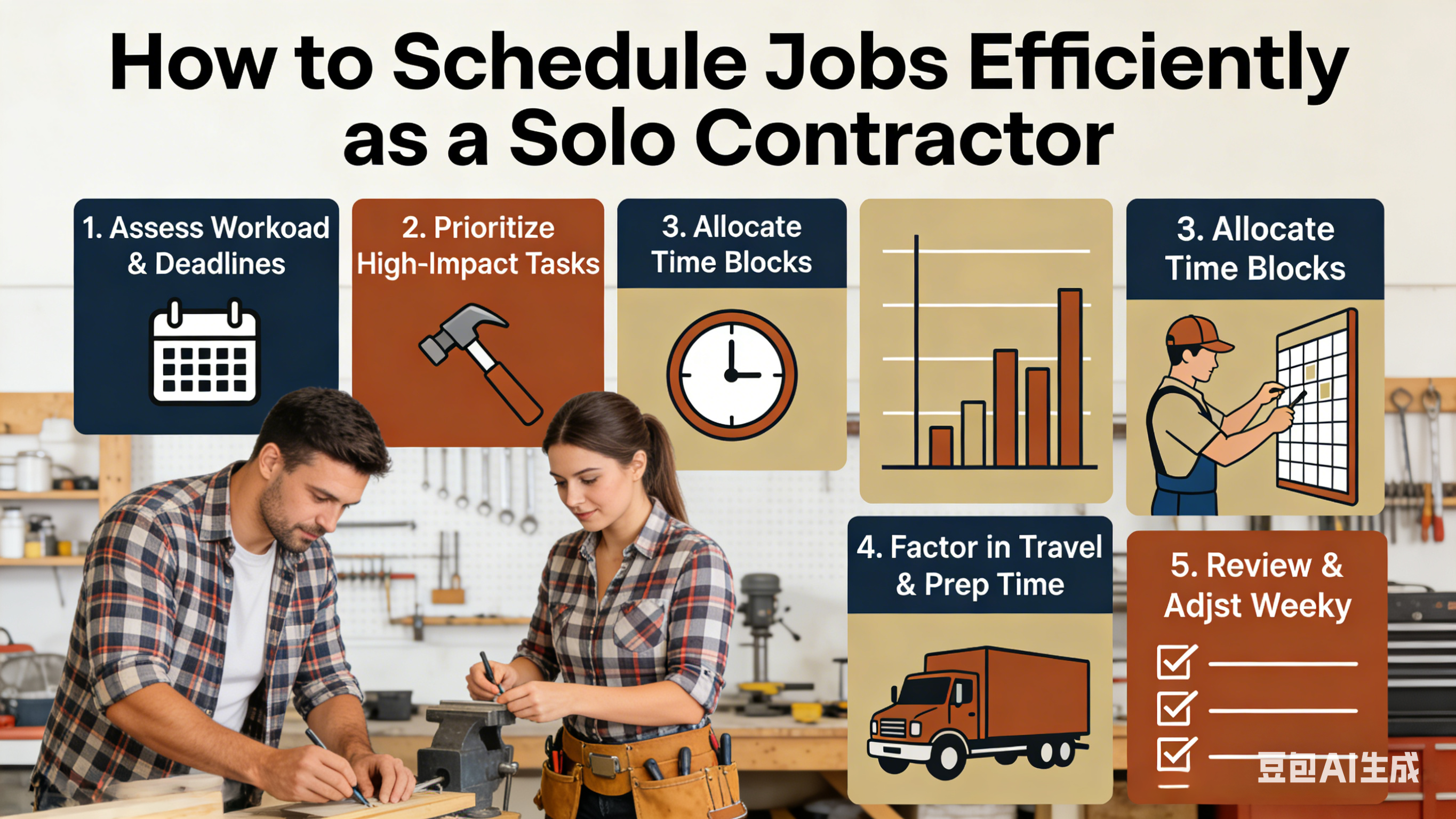
How to Schedule Jobs Efficiently When You’re a Solo Contractor
As a solo tradesman, you wear every hat in the business. You’re the technician, the customer service rep, the accountant, and the scheduler. And when you’re juggling all those roles, it’s easy for your job schedule to spiral into chaos.
Double-bookings, missed appointments, rushed jobs, long drives across town between service calls, and evenings spent scrambling to organize the next day’s work — these aren’t just annoying inconveniences. They cost you money, stress you out, and lead to unhappy clients who won’t hire you again.
The good news? Efficient job scheduling doesn’t require a fancy, expensive software, or a full-time admin. It just requires a simple, repeatable system that’s built for a one-man business.
Below are the proven, actionable steps to schedule your jobs efficiently, reduce your stress, fit more high-quality work into your week, and keep every client happy.
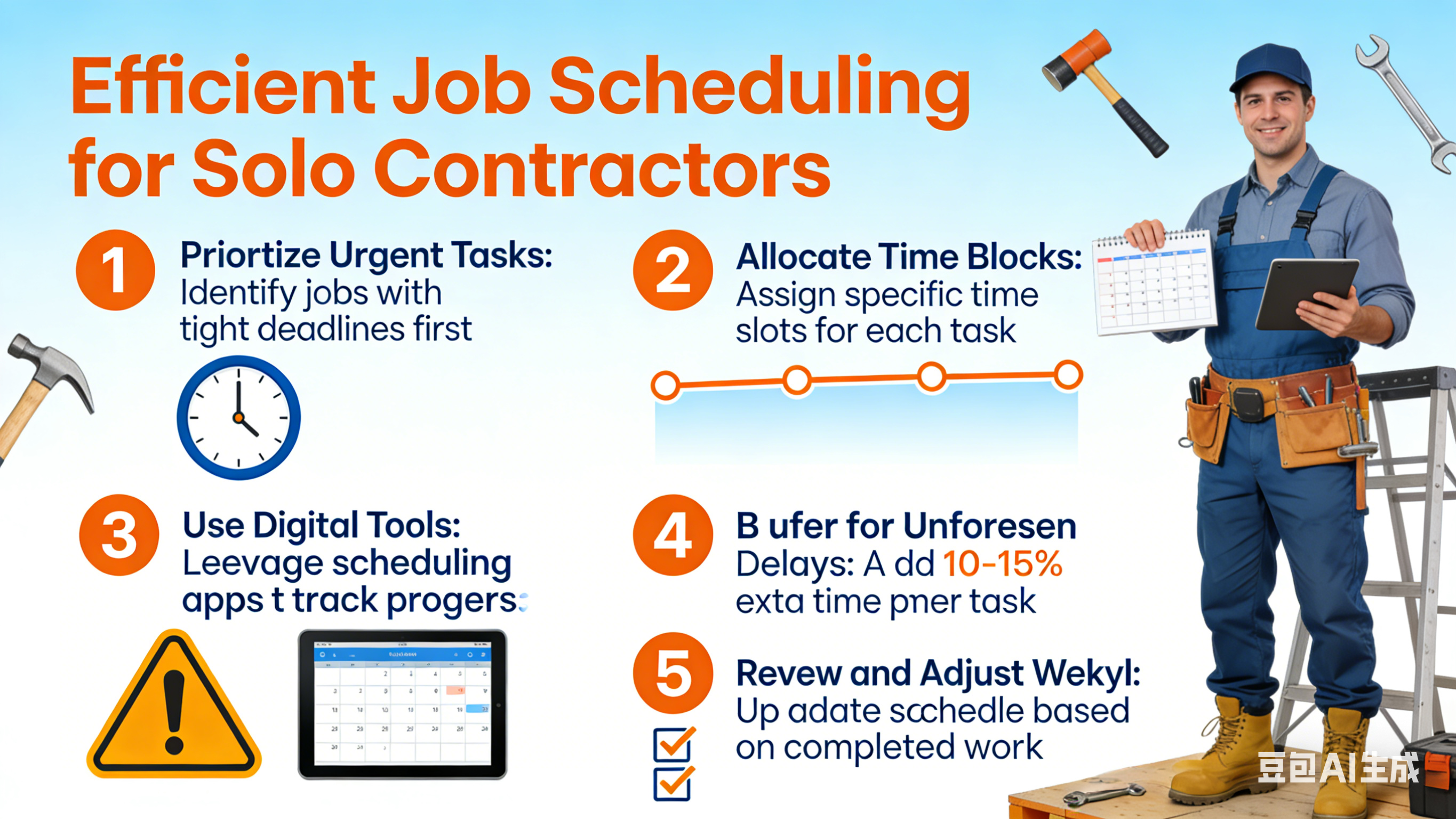
1. Group Jobs By Location to Cut Down on Drive Time
The biggest time-waster for solo contractors is unplanned driving. Every minute you spend in your truck driving across town between jobs is time you’re not getting paid for — and time you could be using to complete another service call.
Most solo tradesmen schedule jobs on a first-come, first-served basis, without thinking about location. This leads to crisscrossing across town multiple times a day, wasting hours in traffic, and rushing from one job to the next.
The fix is simple: group your jobs by geographic area, and assign specific days to specific parts of town.
How to Do It
- Map your service area: Break down the area you serve into 3-4 geographic zones. For example: North Side, South Side, West County, East City.
- Assign specific days to each zone: For example: Mondays = North Side, Tuesdays = South Side, Wednesdays = West County, Thursdays = East City, Fridays = Emergency Calls & Follow-Ups.
- Schedule jobs in the correct zone on their assigned day: When a client calls to book a job, offer them the available days for their zone first. For example: “I service the South Side on Tuesdays. I have an opening at 10am this Tuesday, or 2pm the following Tuesday. Which works better for you?”
- This simple change will cut your drive time by 30-50% overnight. You’ll spend less time in the car, more time on billable work, and you’ll never have to rush across town again to make an appointment.
- For emergency calls that can’t wait for the zone day, you can still fit them in — but by grouping the majority of your jobs by location, you’ll free up time in your schedule to handle emergencies without throwing your entire week off track.
2. Use Realistic Time Blocks (And Add Buffer Time)
The second biggest scheduling mistake solo contractors make is underestimating how long a job will take.
It’s easy to think a simple faucet repair will take 30 minutes, or a standard HVAC service will take an hour. But what if the client has questions? What if you run into a small unexpected issue? What if traffic makes you late?
When you schedule jobs back-to-back with no room for delays, one small overrun will throw your entire day off. You’ll end up rushing through jobs, showing up late to appointments, and disappointing clients — all because you didn’t build in realistic time blocks.
How to Do It
- Be realistic about job timelines: For every type of job you do, create a standard time estimate that includes the full scope of the work: drive time, setup, the repair itself, cleanup, client walkthrough, and paperwork. Don’t just estimate the time you’ll spend with a wrench in your hand.
- Add buffer time to every job: Add 15-30 minutes of buffer time to every single job, depending on the size of the work. For small, 30-minute jobs, add 15 minutes of buffer. For larger, half-day jobs, add 30-60 minutes of buffer. This buffer covers unexpected issues, client questions, traffic delays, and small breaks between jobs.
- Don’t overpack your day: Leave 1-2 hours of open time in your schedule every single day for emergency calls, unexpected delays, or jobs that run longer than expected. This way, if something goes wrong, your entire day won’t collapse. If nothing comes up, you can use that time to fit in an extra small job, catch up on paperwork, or finish early for the day.
- When you use realistic time blocks and build in buffer, you’ll never have to rush through a job again. You’ll show up on time to every appointment, deliver high-quality work, and keep your clients happy.
3. Set Clear Appointment Windows (And Stick to Them)
Nothing frustrates a client more than being told you’ll show up “sometime on Wednesday”, and then waiting around all day for you to arrive. And nothing stresses you out more than a client blowing up your phone every hour asking where you are.
The fix for both problems is simple: set clear, narrow appointment windows, and stick to them.
Many solo contractors make the mistake of promising a strict 9am arrival time, which sets them up for failure if the previous job runs over. Others give a huge 8am-5pm window, which makes the client feel like their time doesn’t matter.
The sweet spot is a 2-hour appointment window. It gives you enough buffer to handle delays, and it gives the client a clear, predictable timeframe so they don’t have to wait around all day.
How to Do It
- Use 2-hour appointment windows for all standard jobs: Instead of promising a 10am sharp arrival, offer a 10am-12pm window, or a 1pm-3pm window. This gives you flexibility, and sets clear expectations for the client.
- Confirm the window the night before: Send a quick text to the client the evening before the job to confirm the appointment window. For example: “Hi [Client Name], just confirming I’ll be at your house tomorrow between 10am and 12pm for your HVAC service. I’ll text you 15 minutes before I arrive. See you tomorrow!”
- Text the client if you’re running early or late: If you’re going to arrive outside the window, text the client immediately. If you’re running early, ask if it’s okay to show up sooner. If you’re running late, apologize sincerely, give them a new arrival time, and offer to reschedule if the new time doesn’t work for them.
- This simple system eliminates 90% of client frustration around arrival times, and reduces the number of “where are you?” calls you get every day. It also helps you stay on track, and keeps your schedule running smoothly.
4. Use a Simple, Centralized Scheduling Tool
You can’t run an efficient scheduling system with a notebook full of scribbled appointments, a bunch of text threads with clients, and a calendar you only update once a week.
Disorganized scheduling leads to double-bookings, missed appointments, and forgotten details about the job. And when you’re a solo contractor, those mistakes cost you clients and money.
You don’t need an expensive, bloated enterprise tool like Jobber to manage your schedule. You just need a simple, lightweight tool that lets you:
- See all your jobs in one calendar view
- Track job details, client information, and notes in one place
- Send automated appointment reminders to clients
- Sync across your phone and your laptop, so you can update your schedule on the go
How to Do It
- Use a tool built for solo tradesmen: A lightweight tool like Rigkit is designed specifically for one-man field service businesses. It lets you schedule jobs, track client details, send automated reminders, and manage your entire workflow in one place — without the bloated features and high price tag of big enterprise tools.
- Update your schedule in real time: Every time you book a new job, reschedule an appointment, or finish a job, update your schedule immediately. Don’t wait until the end of the day to scribble it down — you’ll forget details, or accidentally double-book.
- Share your schedule with clients (optional): For repeat clients, you can share a link to your available appointment slots, so they can book a time that works for them without having to text back and forth. This saves you hours of time every week, and makes it easy for clients to book with you again.
- A centralized scheduling tool eliminates human error, keeps you organized, and saves you hours of administrative work every week. It turns a chaotic, scattered schedule into a simple, streamlined system that runs itself.
5. Learn to Say No (And Stop Overbooking)
The fastest way to destroy your schedule, your work quality, and your client relationships is to overbook yourself.
It’s tempting to say yes to every job that comes in, especially when you’re worried about filling your schedule. But when you overbook, you end up rushing through jobs, showing up late, cutting corners, and delivering poor quality work. This leads to unhappy clients, bad reviews, and a business that’s unsustainable in the long run.
Efficient scheduling isn’t about fitting as many jobs as possible into your week. It’s about fitting the right number of jobs, so you can deliver high-quality work, show up on time, and keep every client happy.
How to Do It
- Know your maximum capacity: Be realistic about how many jobs you can complete in a day, while still delivering high-quality work and staying on schedule. For example, if you can comfortably complete 4 standard service calls in a day, don’t book 6.
- Don’t be afraid to say no, or to reschedule: If a client asks for a time that’s already booked, don’t squeeze them in and overbook yourself. Instead, offer them the next available appointment, and explain that you want to give their job the time and attention it deserves. For example: “I don’t have any openings this week, but I have a slot at 10am next Tuesday. I’d rather book you for then, so I can give your job the full time and attention it needs, instead of rushing through it.”
- Prioritize repeat clients and high-value jobs: Not every job is worth squeezing into your schedule. Prioritize loyal repeat clients, and high-value jobs that are worth your time. For small, low-value jobs that don’t fit into your schedule, you can either refer them to another trusted tradesman, or book them for a later date.
- Learning to say no is hard, but it’s the key to a sustainable, low-stress business. When you stop overbooking, you’ll deliver better work, keep your clients happier, and make more money in the long run.
Final Thoughts
Efficient job scheduling isn’t about being busy. It’s about being intentional with your time, your most valuable asset.
By grouping jobs by location, using realistic time blocks, setting clear appointment windows, using a centralized scheduling tool, and learning to say no to overbooking, you’ll build a schedule that runs smoothly, reduces your stress, and lets you deliver consistent, high-quality work to every client.
You don’t need a fancy degree or an expensive team to do this. You just need a simple, repeatable system that’s built for your one-man business.
Rigkit, Master Your Workflow. Amplify Your Success.