How to Run a Small Service Business With Only Basic Tools
If you’re a solo operator, independent contractor, or home service pro, you already know this truth:
You don’t need expensive, complicated tools to run a profitable service business.
You just need the right basics—organized, reliable, and affordable.
Many new service business owners fall into the trap of overinvesting. They buy software built for large teams, subscribe to tools they never use, and overcomplicate systems that should stay simple. The result? Wasted money, extra stress, and less time actually doing the work you’re good at.
The good news is you can build and grow a strong service business with only basic tools. Here’s how to do it smartly.
1. Start with Simple Organization (Not Fancy Software)
The biggest struggle for small service businesses is chaos:
- Customer information spread across texts, notes, and spreadsheets
- Missed appointments or forgotten follow-ups
- Unorganized job details that lead to mistakes
- You don’t need enterprise-level software to fix this.
- A basic, all-in-one tool that tracks clients, jobs, and history is more than enough. The goal is clarity, not complexity. Keep everything in one place so you can focus on work—not searching for information.
2. Schedule Your Work Without Overcomplicating It
Scheduling doesn’t need to be fancy. You just need to:
- See your daily or weekly workload at a glance
- Avoid double-booking
- Plan your route and time efficiently
- Many expensive platforms overload you with team features, automation, and reporting you’ll never use. For a small or solo business, basic scheduling keeps you on track without wasting time learning complicated systems.
3. Invoice & Get Paid Quickly (With Minimal Effort)
Cash flow is everything in a service business.
The longer you take to send an invoice, the longer you wait to get paid.
Basic invoicing tools let you:
- Create service items fast
- Send clean, professional invoices
- Let customers pay you online
- You don’t need complex accounting software—just a reliable way to bill and get paid on time.
4. Track Mileage & Expenses for Tax Deductions
One of the easiest wins for small service businesses is maximizing tax deductions.
Mileage alone can save you hundreds or thousands of dollars per year.
A basic tool that automatically tracks your miles eliminates:
- Guessing how much you drove
- Manually logging trips
- Missing out on deductions
- It’s simple, but it makes a huge difference at tax time.
5. Use a Basic Landing Page to Capture Leads
You don’t need a full website to get new customers.
A simple, clean profile page lets you:
- Share your services
- Let customers send you job requests
- Look professional without high costs
- When leads come straight to you, you spend less time chasing work and more time doing it.
6. Stop Overpaying for Tools You Don’t Need
Here’s a hard truth:
Most tools for service businesses are built for companies with employees—not solo operators and small teams.
If you’re paying for features like team management, multi-user access, or enterprise reporting but working alone or with a tiny crew, you’re wasting money.
The best setup for a small service business is:
- Built for solo & small operators
- Easy to learn
- No hidden fees
- Affordable monthly cost
- Only the features you actually use
7. Focus on What Actually Moves the Needle
When you run a small service business with only basic tools, you force yourself to focus on what matters:
- Doing great work
- Taking care of customers
- Showing up on time
- Getting paid consistently
- Staying organized
- Complicated tools distract you from the real work. Basic tools support it.
Final Thoughts
You don’t need a big budget, fancy software, or a complicated system to succeed.
Some of the most successful service businesses are run by solo operators using simple, reliable tools that fit their workflow—not the other way around.
If you’re tired of overpaying for tools that are too complex, simplify.
Stick to the basics. Stay organized. Keep costs low.
Your business will run smoother, and you’ll keep more of the money you earn.
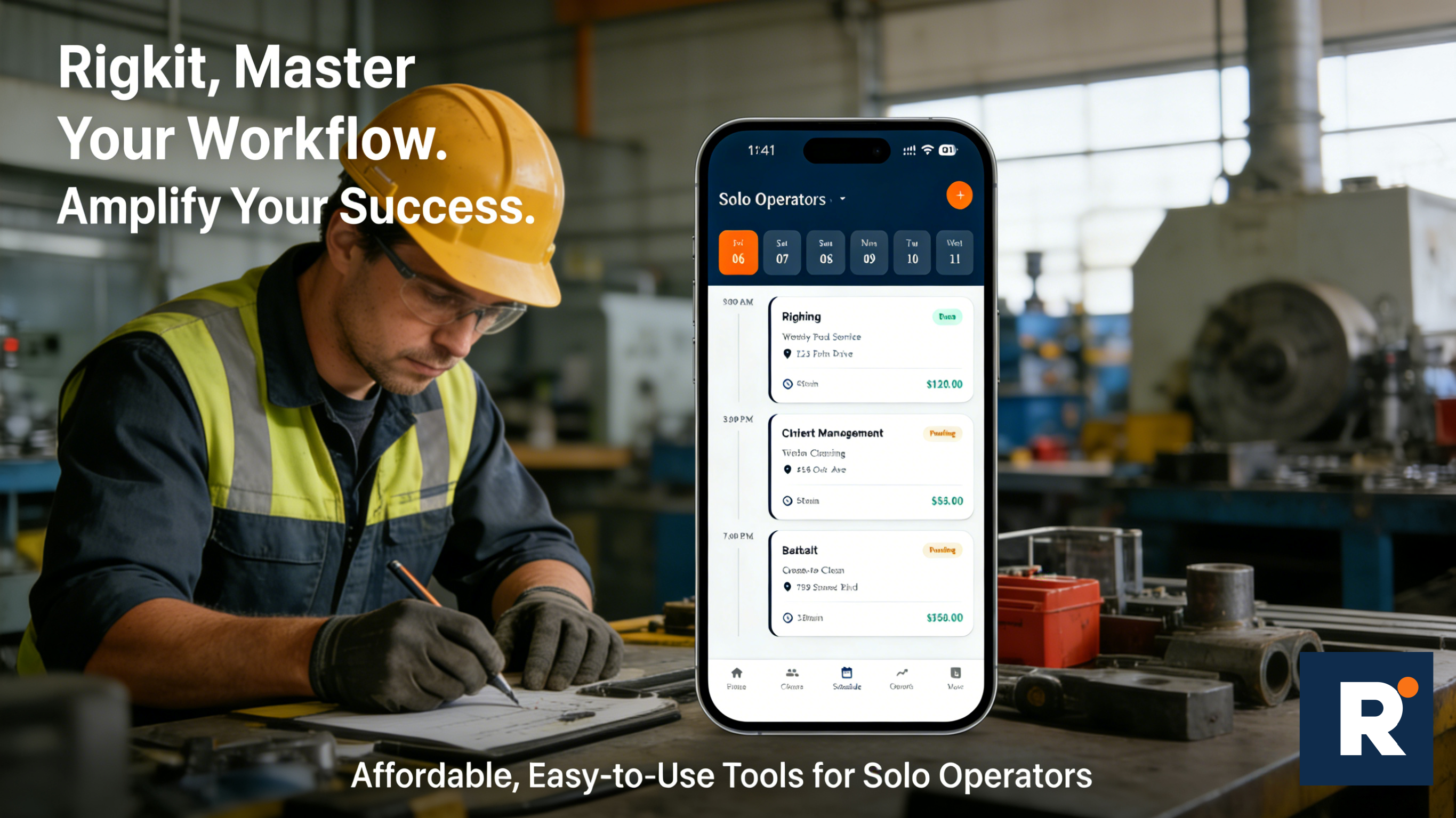
Rigkit, Master Your Workflow. Amplify Your Success.