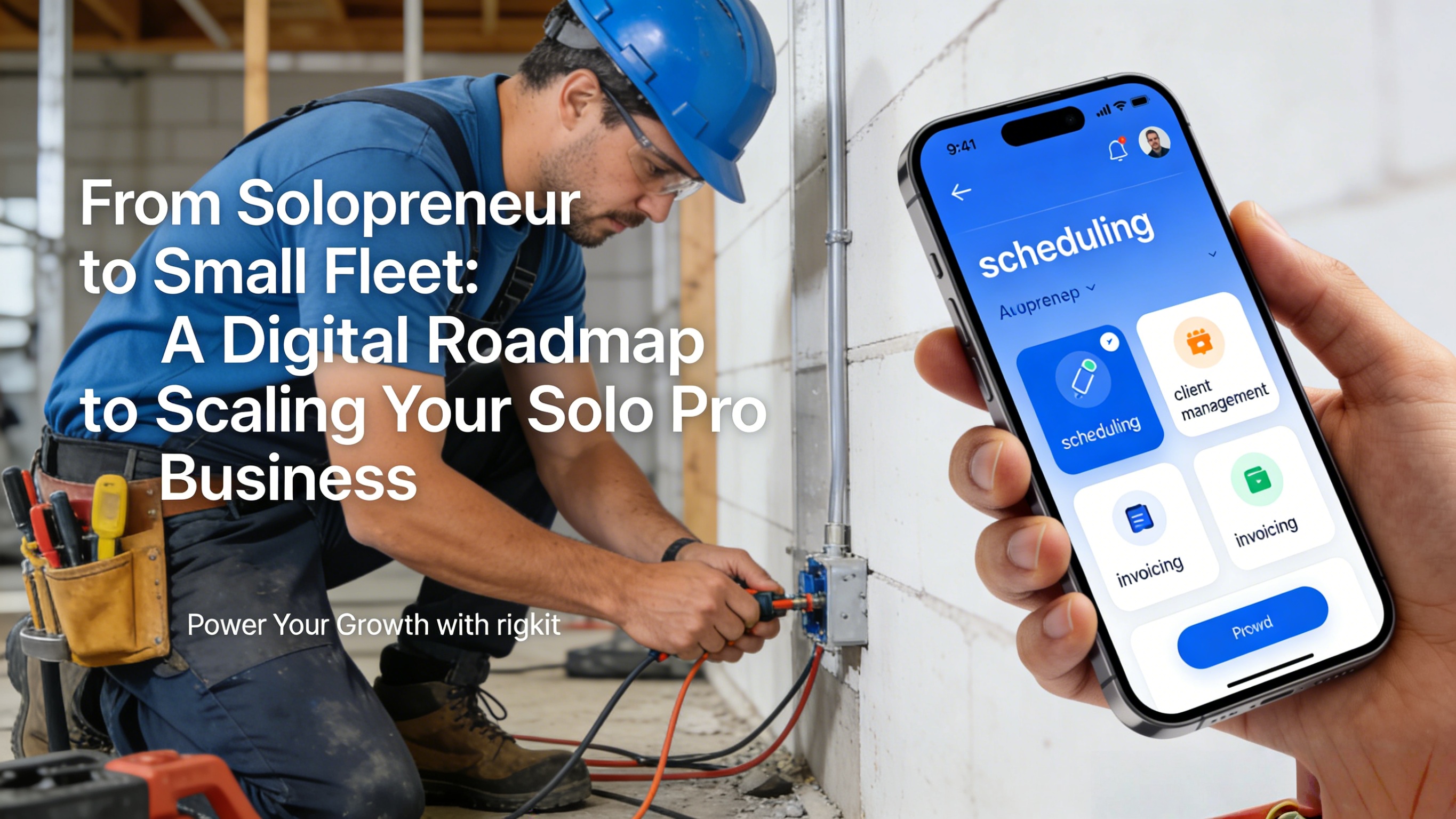
In the skilled trades—whether you are an electrician, plumber, or HVAC technician—the "solo pro" phase is a rite of passage. You are the technician, the bookkeeper, the salesperson, and the dispatcher. However, there comes a point where "doing it all" becomes the very thing holding you back. In 2026, the roadmap to scaling is built on a digital foundation.
1. Standardize Your Sales Process
Scaling starts with consistency. If every quote you send looks different, you can't delegate sales. Using a tool like Rigkit allows you to create professional, branded templates. When you hire your first technician, they can use your pre-set pricing to close deals exactly how you would.
2.Move from Reactive to Proactive Scheduling
A solo pro can keep a schedule in their head. A fleet cannot. As you add trucks, "dead time" (driving between jobs) becomes your biggest profit killer. You need a centralized system to visualize your team's location in real-time. Digital scheduling ensures that as your team grows, your efficiency doesn't drop.
3. The "Paperless" Field Office
The biggest bottleneck in scaling is the "Friday Night Paperwork" session. If your technicians are handing you physical invoices at the end of the week, your cash flow is already behind. With a mobile-first system, your team can capture "before and after" photos, get digital signatures, and process payments immediately.
4. Build Your Customer Database (CRM)
A solo pro operation relies on a "handshake" reputation. A fleet relies on data. A CRM allows you to track service history and equipment models. This turns a one-time repair into a lifetime recurring revenue stream—the key to funding new trucks.
5. Automate the Admin Work
As you scale from 1 to 5 trucks, admin tasks multiply. In 2026, automation is no longer optional. Use software to automate follow-up emails and "On my way" SMS alerts. By offloading these to Rigkit, you stay lean without needing to hire an office manager too early.
Growth isn't just about buying more trucks; it’s about building a system that can handle them. By adopting a digital roadmap early, you ensure that your solo pro business remains professional and profitable—no matter how many "rigs" you have on the road.