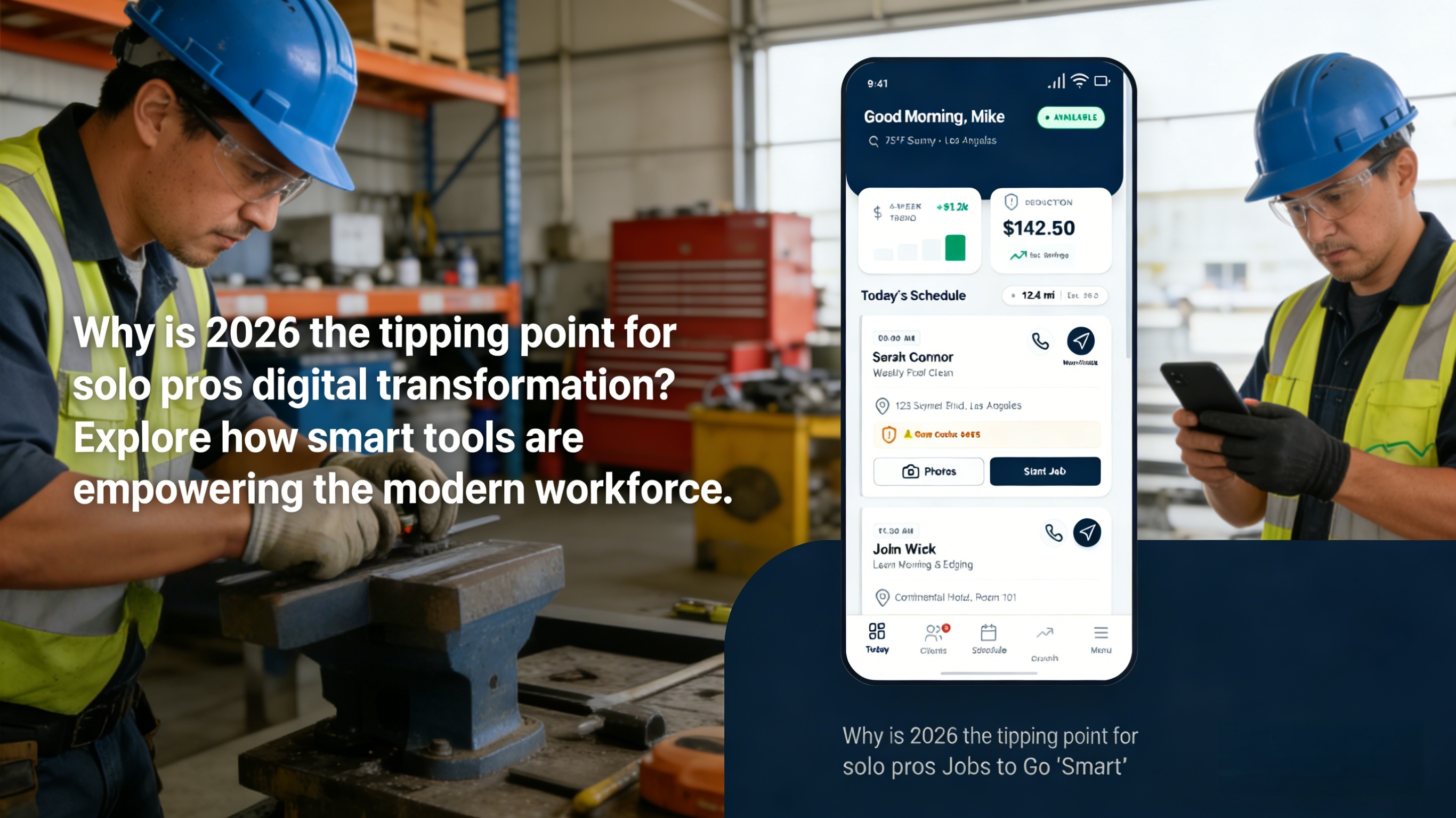
For years, the "Solo Pro" path in the trades was defined by grit, long hours, and a truck full of receipts. But in 2026, being a "one-man show" doesn't mean you have to work like it's 1990. The gap between independent contractors and massive fleets is closing, thanks to smart technology.
1. You Are the CEO and the Technician
As a Solo Pro, you don't have an office team to handle your paperwork. Every minute spent on a clipboard is a minute you aren't billing. By adopting platforms like Rigkit, you automate the "office work," allowing you to focus on the high-value repairs that actually pay the bills.
2. Your Phone is Your Mobile Headquarters
You're always on the move—from the yard to the jobsite. You need tech that lives in your pocket, not on a desk. Mobile-first tools like Rigkit are built for the Solo Pro who needs to log a service, check a manual, or update a work order while leaning against a fender.
3. Efficiency is Your Secret Weapon
For a Solo Pro, downtime isn't just a nuisance; it's a total loss of income. A "smart" workflow gives you the same predictive maintenance capabilities as the giants. Knowing exactly when your rig needs attention prevents the breakdowns that sideline your entire business.
4. Professionalism Built on Data
Clients in 2026 expect professional, digital records. When you show up with a smart system like Rigkit, you look like a top-tier operation. Digital logs and automated compliance reports build trust with your customers and protect your solo business from liability.
5. Scaling Without the Overhead
Going "Smart" allows you to manage more equipment and more clients without hiring an assistant. It’s about leveraging technology to do the heavy lifting of organization, so you can grow your reputation and your revenue as a successful Solo Pro.
The "Smart Era" is about empowering the human element of the trades. By giving your team the digital tools they need, you ensure your business remains resilient. Is your fleet ready?