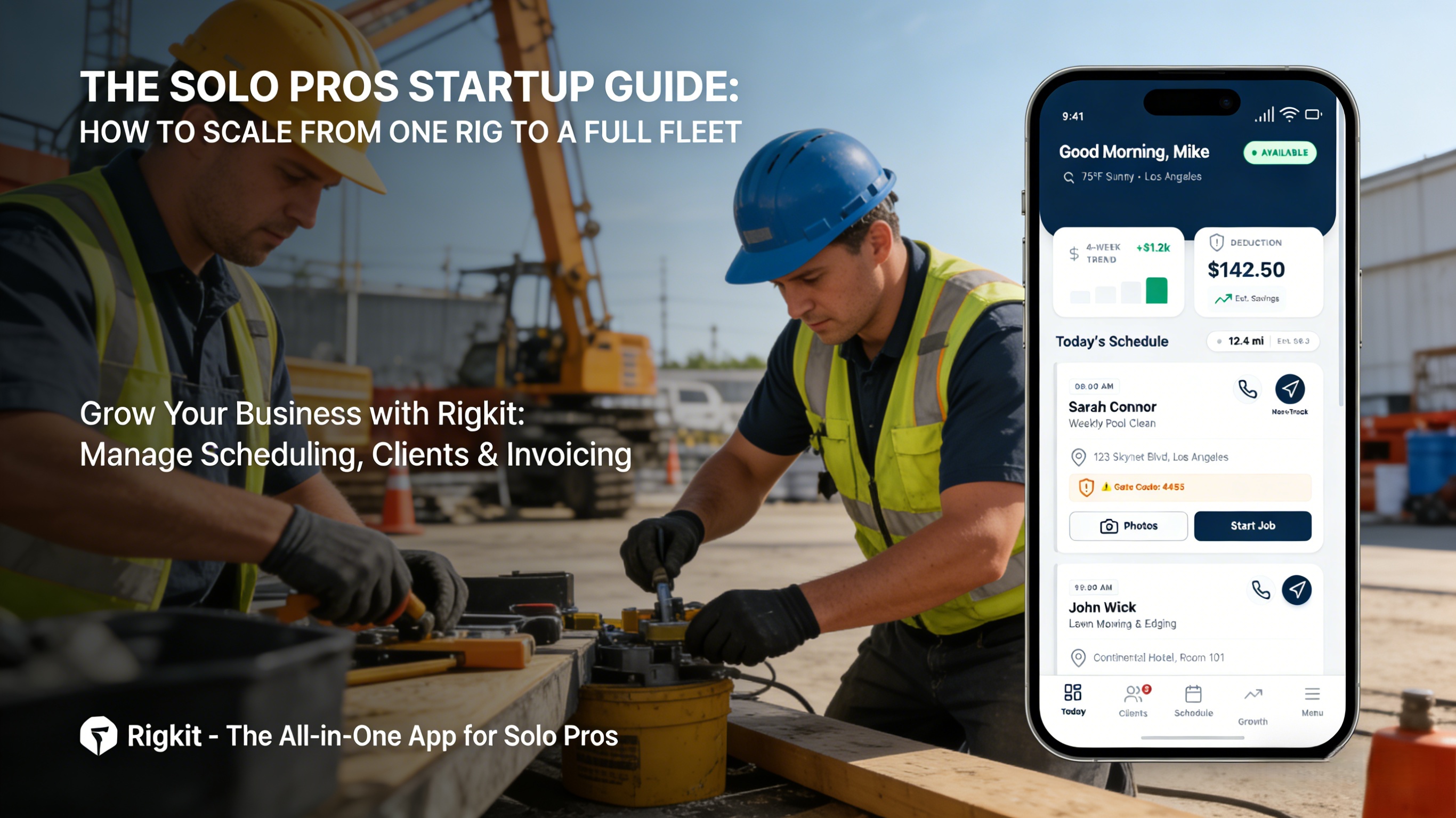
The American dream is alive and well for solo pros. Whether you are an owner-operator with a single semi-truck, an excavator with one backhoe, or a specialized contractor with a high-end service rig, the goal is often the same: to grow.
However, moving from a "one-man show" to managing a fleet is the most challenging phase for any small business. Without the right systems, growth leads to chaos, not profit. In this guide, we break down the roadmap for solo pros to scale their operations in 2026.
1. Shift Your Mindset: Operator vs. Business Owner
When you are a solo pro, you are the mechanic, the driver, and the accountant. To scale, you must stop working in the business and start working on the business.
You need to transition from manual logs to digital infrastructure. Successful fleet owners don't rely on memory; they rely on data. This is where tools like Rigkit become essential, allowing you to track your equipment’s health and job site efficiency directly from your smartphone.
2. Master Your Unit Economics
Before you buy your second or third rig, you must know exactly how much your first one makes per hour. As a solo pro, your time is your most valuable asset.
Operating Costs: Fuel, insurance, and maintenance.
Depreciation: How much value is your equipment losing daily?
Break-even Point: How many days a month must that rig work to pay for itself?
3. Standardize Your Workflow
Scaling means other people will eventually be driving your rigs. If you don't have a standard process for pre-trip inspections, maintenance logs, and job reporting, your equipment will suffer.
Using a centralized platform like Rigkit ensures that every future operator follows the same protocol. Digital documentation prevents "he-said-she-said" scenarios and keeps your fleet’s resale value high as you expand.
4. Leverage Technology for Field Management
In 2026, the competitive edge isn't just better hardware; it's better software. Many solo pros struggle because they lose track of invoices or miss critical maintenance windows during busy seasons.
Rigkit was specifically designed for the modern solo pro. It simplifies:
Mileage and Hour Tracking: No more guessing when an oil change is due.
Project Documentation: Capture job site progress and expenses in real-time.
Fleet Visibility: Know where your assets are and how they are performing without being on-site 24/7.
5. Reinvest Wisely
The temptation to buy the newest, shiniest truck as soon as you have a surplus is high. But scaling requires a balance of assets and liquidity.
Used vs. New: Sometimes two reliable used rigs are better for rapid growth than one brand-new expensive model.
Hire for Character: Your first few hires define your company’s reputation. Hire people who treat your equipment with the same respect you do as a solo pro.
Scaling from one rig to a fleet is a marathon, not a sprint. By combining your hands-on expertise as a solo pro with modern management tools like Rigkit, you can build a business that runs itself while you focus on winning the next big contract.