The dream of being your own boss is powerful. No more punching a clock for someone else, no more fixed salaries, and the freedom to choose your own projects. But for many skilled tradespeople—electricians, plumbers, HVAC techs, and landscapers—the "business" side of things can be more intimidating than the actual labor.
If you’re ready to move from employee to "Solo-preneur," you need more than just a truck and a toolbox. You need a system. Use this 2026 practical guide to launch your independent trade business from scratch.
1. Legalize Your Hustle
Before you pick up a wrench, make sure the government knows you exist. Doing this right prevents massive headaches during tax season.
Choose a Business Structure:Most solo pros start as a Sole Proprietorship or an LLC. An LLC is often preferred as it protects your personal assets from business liabilities.
Get an EIN:An Employer Identification Number (EIN) is like a social security number for your business. It allows you to open a business bank account.
Register for Licenses:Check your state and local requirements. Most trades require specific certifications to operate legally.
2. Protect Your Assets
In the trades, things can go wrong. A pipe bursts, or a ladder slips. You need a safety net.
General Liability Insurance:This is non-negotiable. It protects you if you cause damage to a client’s property.
Occupational Accident Insurance :Since you won't have worker's comp from an employer, you need to protect yourself if you get hurt and can’t work.
3. Build Your "Digital Rig"
The modern solo pro doesn't manage their business on the back of a napkin. To stay profitable, you need to digitize your workflow from Day 1.
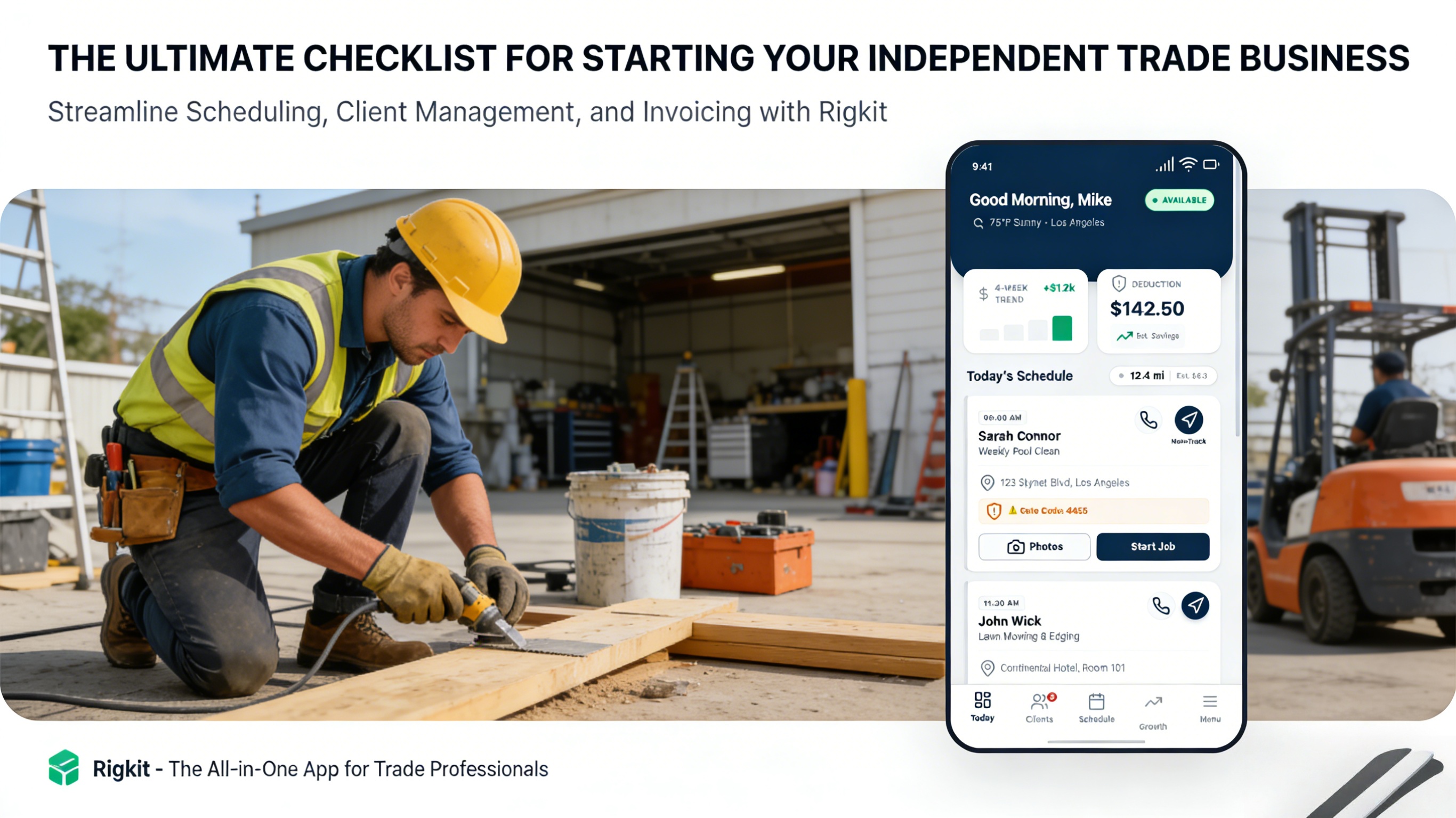
This is where Rigkit becomes your most valuable tool. Instead of juggling five different apps, you need one "Command Center" that handles:
Mileage Tracking: Every mile you drive to a job site is a tax deduction. If you aren't tracking it automatically, you are literally throwing money away.
Client Management:Keep your customer history, contact info, and job notes in one place.
Quick Invoicing : The faster you send the bill, the faster you get paid.
Pro Tip: Don't wait until you're "busy" to find a software solution. Start with Rigkit while you're small so your systems are ready to scale.
4. Branding and Digital Presence
If people can't find you on their phones, you don't exist.
Google Business Profile : This is the #1 way solo pros get local leads. Set it up and start asking for reviews immediately.
Niche Social Media: Join local Facebook community groups and the r/Rigkit community on Reddit to network with other pros.
5. Master Your Finances
Profit is what's left after all the expenses are paid.
Separate Your Bank Accounts : Never mix personal and business money. It makes accounting a nightmare.
Set Aside Tax Money : Aim to set aside 25-30% of every check into a separate "Tax Savings" account.
Starting an independent business is a marathon, not a sprint. By following this checklist and leveraging tools like Rigkit, you spend less time on paperwork and more time doing the work that pays.The Grind is Better When It’s Yours