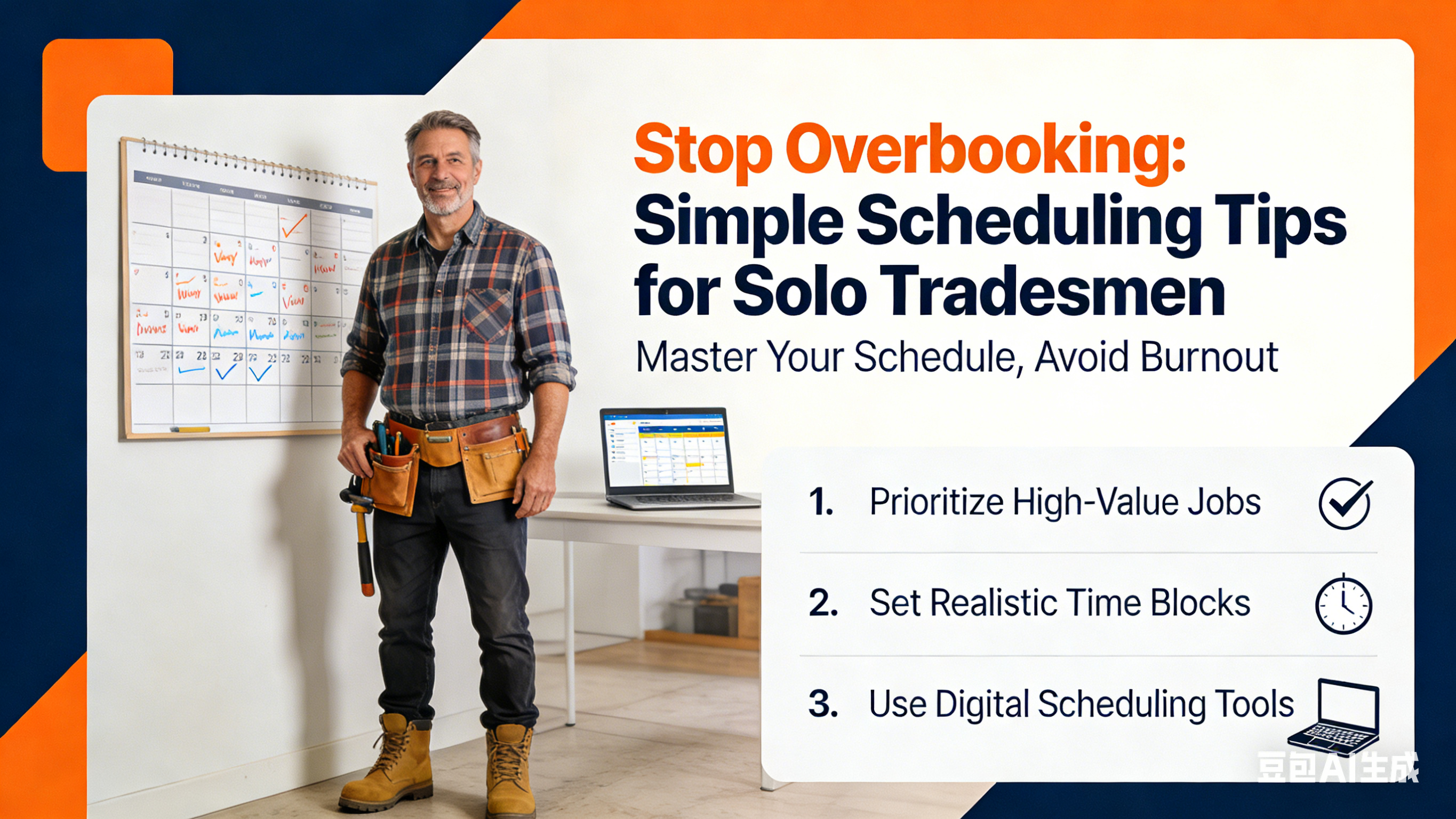
Stop Overbooking: Simple Scheduling Tips for Solo Tradesmen
As a solo tradesman, it’s easy to fall into the overbooking trap.
When a client calls with a job, you want to say yes. You worry about leaving money on the table, about having empty slots in your schedule, about turning away work that could turn into a loyal repeat client. So you squeeze the job in, even if your schedule is already full.
But overbooking never works out the way you hope. It leads to:
- Rushed, low-quality work that leads to callbacks and bad reviews
- Late arrivals and missed appointments that frustrate clients
- Endless stress, long days, and no time for breaks
- Burnout that makes you hate the business you built
- The truth is, overbooking doesn’t make you more money. It costs you money, clients, and your sanity. The good news? Stopping overbooking is simple, with a few easy, repeatable changes to how you schedule your jobs.
- Below are the actionable tips to stop overbooking for good, build a realistic schedule that works for you, and keep every client happy with your work.
1. Know Your Real Capacity (And Stick to It)
The #1 reason you overbook is that you don’t have a clear, realistic understanding of how much work you can actually complete in a day.
Most solo tradesmen estimate their capacity based on how long a job “should” take — not how long it actually takes, when you factor in drive time, setup, cleanup, client questions, paperwork, and unexpected delays.
When you base your schedule on ideal, best-case-scenario timelines, you’ll always end up overbooked. Because in the real world, jobs almost always take longer than you think they will.
How to Do It
- Calculate your real, billable capacity: Track your time for 2 weeks, for every single job. Write down exactly how long you spend on: drive time, setup, the repair itself, cleanup, client walkthrough, and paperwork. You’ll quickly see that a job you thought took 1 hour actually takes 1.5-2 hours, when you include everything.
- Set a maximum number of jobs per day: Based on your real capacity, set a strict maximum number of jobs you can complete in a day, while still delivering high-quality work. For example, if your real capacity is 4 standard service calls per day, set that as your hard limit. Never book more than that, no matter how tempting it is.
- Reserve 20% of your day for the unexpected: Every day, leave 1-2 hours completely open. This time is for emergency calls, unexpected delays, jobs that run over, or client questions. This buffer ensures that even if something goes wrong, you won’t throw your entire day off track, and you won’t have to squeeze more work into an already full schedule.
- When you know your real capacity and stick to it, you’ll never overbook again. You’ll have a realistic schedule that you can actually follow, without rushing or cutting corners.
2. Stop Using First-Come, First-Served Scheduling
The second biggest cause of overbooking is scheduling every job on the exact day the client asks for it, no matter what.
First-come, first-served scheduling sounds fair, but it’s a disaster for solo tradesmen. It leads to crisscrossing across town multiple times a day, jobs stacked back-to-back with no buffer, and no room to fit in the work you already committed to.
When you prioritize the client’s requested date over your own capacity, you’ll always end up overbooked. The fix is to take control of your schedule, and set clear boundaries around when you work, and where you work.
How to Do It
- Implement zone scheduling: As we covered in our efficient scheduling guide, break your service area into 3-4 geographic zones, and assign specific days to each zone. For example: Mondays = North Side, Tuesdays = South Side, Wednesdays = West County, Thursdays = East City. When a client calls to book a job, offer them the available days for their zone first. This eliminates cross-town driving, and ensures you don’t end up with 5 jobs spread across the city in one day.
- Offer alternative dates first: If a client asks for a day that’s already at your maximum capacity, don’t squeeze them in. Instead, offer them the next 2-3 available dates, and explain why you’re not able to book them on their requested day. For example: “I don’t have any openings this Thursday, but I have a slot at 10am next Tuesday, or 2pm next Thursday. I never overbook my schedule, because I want to give every job the time and attention it deserves, and make sure I show up on time for every client. Would either of those dates work for you?”
- Prioritize repeat clients and high-value work: Not every job is worth overbooking for. If you have to choose between a new, small, one-time job and a repeat loyal client, prioritize the repeat client. They’re the backbone of your business, and they deserve priority access to your schedule.
- By taking control of your schedule, instead of letting every client’s request dictate it, you’ll eliminate the pressure to overbook. You’ll set clear expectations with clients, and build a schedule that’s sustainable and stress-free.
3. Learn to Say No (Without Losing the Client)
The hardest part of stopping overbooking is learning to say no to a job. It’s natural to worry that if you turn down a client, they’ll never call you again, and you’ll lose the work forever.
But the truth is, saying no to a job that you can’t fit into your schedule without overbooking will earn you more respect from the client, and lead to more business in the long run — than squeezing them in and delivering a rushed, low-quality experience.
Clients don’t want to be an afterthought in an overpacked schedule. They want to hire a tradesman who values their work enough to give it the time and attention it deserves.
How to Say No Without Losing the Client
- Be honest and transparent: Don’t make up excuses about being busy. Be upfront about why you can’t book them on their requested date. For example: “I don’t have any openings this week, because I limit the number of jobs I take on each day to make sure I can deliver high-quality work, and show up on time for every client. I’d rather book you for next week, than rush through your job and not give it the attention it deserves.”
- Offer clear alternatives: Don’t just say no — give them the next 2-3 available dates, so they have options. If the job is an emergency that can’t wait, refer them to another trusted tradesman you know will do a good job. This shows you care about their problem, even if you can’t solve it yourself.
- Add them to a waitlist: If a client really wants to work with you, and your schedule is full for the next few weeks, add them to a waitlist. If a job cancels, you can reach out to them and offer the slot. Most clients will be happy to wait for a tradesman they trust, rather than hiring someone random.
- When you say no with honesty and respect, you’ll build trust with the client. Even if they can’t wait for your next available slot, they’ll remember your professionalism, and they’ll call you first the next time they need work done.
4. Use a Scheduling Tool That Enforces Your Boundaries
It’s easy to overbook when your schedule is scattered across a notebook, a bunch of text threads, and a calendar that you don’t update regularly. When you can’t see your full schedule at a glance, you’ll accidentally book two jobs at the same time, or squeeze in more work than you can handle.
A good scheduling tool doesn’t just help you organize your jobs — it helps you enforce your capacity limits, and stop overbooking before it happens.
You don’t need an expensive, bloated software to do this. You just need a simple tool that lets you see your full schedule at a glance, set capacity limits, and avoid double-bookings.
How to Do It
- Use a tool built for solo tradesmen: A lightweight tool like Rigkit is designed specifically for one-man field service businesses. It lets you see all your jobs in a single calendar view, set maximum capacity per day, and track all client and job details in one place. It eliminates the risk of double-bookings, and makes it easy to see when your schedule is full, so you don’t accidentally overbook.
- Set up automated appointment reminders: Missed appointments and last-minute cancellations are a big reason many solo tradesmen overbook — they want to fill the gaps if a job cancels. Automated appointment reminders sent to clients 24 hours before the job will drastically reduce no-shows and cancellations, so you don’t have to overbook to “cover” for missed jobs.
- Update your schedule in real time: Every time you book a job, reschedule an appointment, or finish a job, update your schedule immediately. This way, you always have an accurate view of your capacity, and you’ll never accidentally book a job you don’t have time for.
- With the right tool, you’ll eliminate the human error that leads to overbooking. You’ll have a clear, accurate view of your schedule at all times, so you can make smart decisions about which jobs to take on, and which to schedule for later.
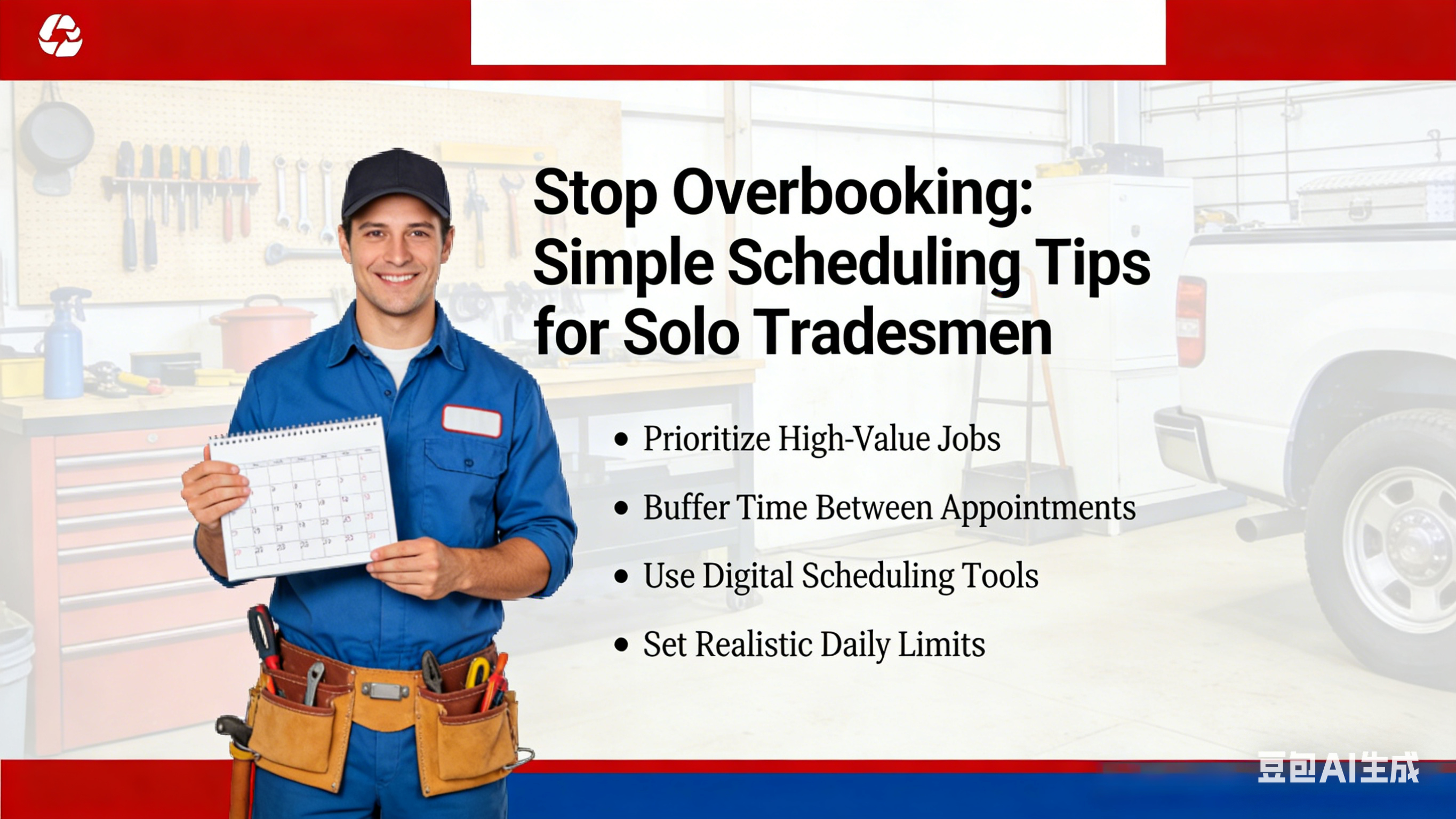
5. Stop Glorifying Being Busy
The final, and most important, step to stop overbooking is to change your mindset about being busy.
Many solo tradesmen fall into the trap of thinking that a full schedule = a successful business. They wear their 12-hour days, back-to-back jobs, and endless stress like a badge of honor.
But being busy and being profitable are not the same thing. A schedule full of rushed, low-quality jobs that lead to callbacks and unhappy clients will never build a successful, sustainable business. A schedule with the right number of high-quality jobs, that you can complete well, on time, and without stress, will.
How to Shift Your Mindset
- Focus on profit, not volume: Instead of trying to fit as many jobs as possible into your week, focus on taking on the jobs that are the most profitable, and the clients that are the most loyal. 4 high-quality, high-value jobs a day will make you more money, with less stress, than 6 rushed, low-value jobs.
- Prioritize your work-life balance: Your business should support your life, not take it over. When you overbook, you’re not just sacrificing the quality of your work — you’re sacrificing time with your family, your health, and your ability to enjoy the business you built. A sustainable schedule is one that lets you do great work, and still have time for the things that matter outside of work.
- Trust that the work will come: The fear of empty slots in your schedule is what drives most overbooking. But when you stop overbooking, deliver consistent high-quality work, and keep your clients happy, you’ll build a base of loyal repeat clients and word-of-mouth referrals. You’ll never have to worry about empty slots again, because your schedule will be filled with great clients, not rushed jobs you squeezed in out of fear.
Final Thoughts
Overbooking is a trap that’s easy to fall into, but it’s not a sustainable way to run a business. It hurts your work quality, frustrates your clients, and burns you out.
By knowing your real capacity, taking control of your schedule, learning to say no with respect, using the right tools, and shifting your mindset away from glorifying busyness, you’ll stop overbooking for good.
You’ll build a sustainable, low-stress business that delivers consistent, high-quality work, keeps every client happy, and lets you enjoy the freedom of being a solo tradesman.
Rigkit, Master Your Workflow. Amplify Your Success.